
Maintaining optimal power quality and efficiency in industrial and commercial facilities requires careful selection of a Static Var Generator (SVG). This guide outlines key considerations—such as load type, power requirements, and specific application needs—to help you choose the right SVG for your energy management system.
Understanding Your Load Type
Different electrical loads influence SVG selection:
Inductive (Linear) Loads
Facilities with primarily inductive loads (e.g., induction motors and transformers) benefit from SVGs that provide stable reactive power compensation. These devices improve power factor by offsetting the inductive reactive power, thereby reducing losses and enhancing overall efficiency.
Nonlinear Loads
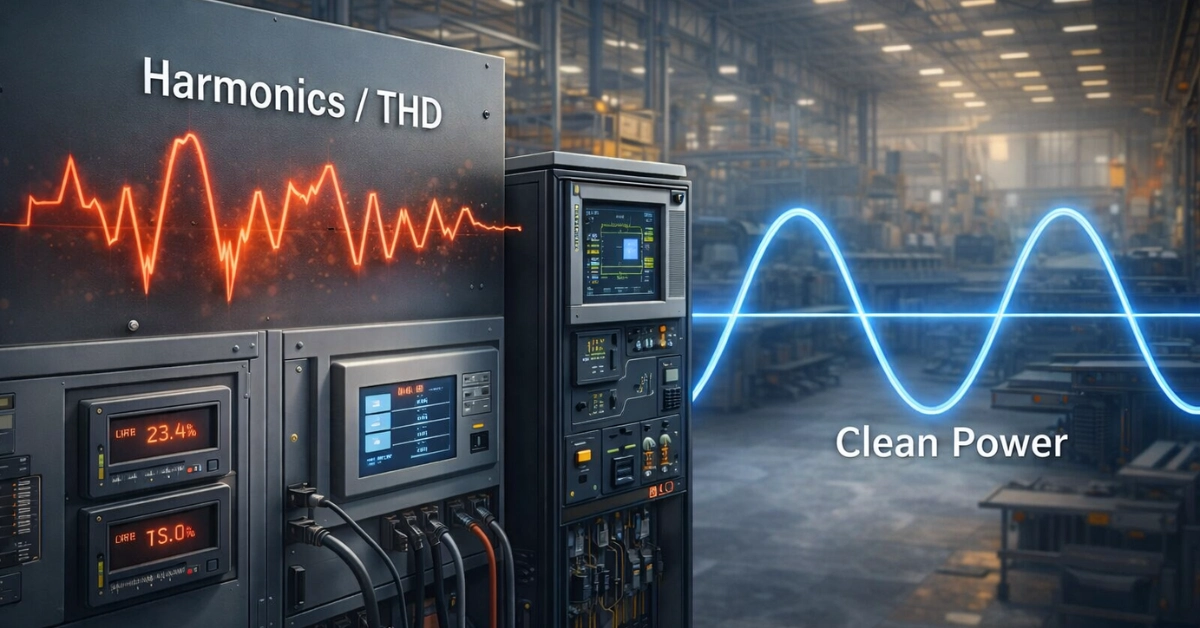
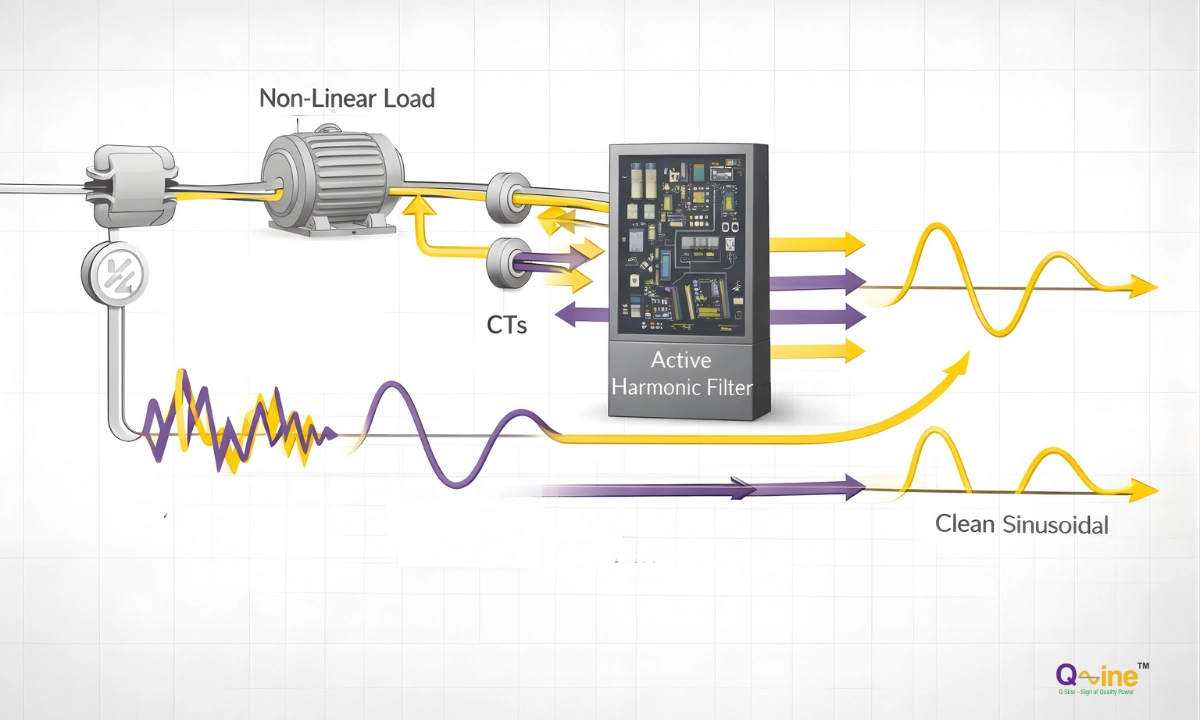
Nonlinear loads (e.g., VFDs, UPS systems, and various electronics) tend to generate harmonic distortions. Although SVGs are primarily designed to manage reactive power, they do not inherently mitigate harmonics. For facilities facing harmonic issues, it is advisable to pair the SVG with an Active Harmonic Filter (AHF) or opt for an ASVG that offers integrated harmonic filtering if available.
Assessing Power Requirements
Reactive Power (kVAR) Needs
Determine your facility’s reactive power requirements (in kVAR) rather than focusing on total apparent power (kVA). For instance, a 1000 kVA load operating at a 0.7 power factor typically requires around 714 kVAR of compensation. This calculation ensures the SVG is correctly sized for the compensation needs of your facility.
Dynamic Response Time
For applications with rapidly fluctuating loads—such as in manufacturing environments—select an SVG with a sub-cycle response time (typically less than 20 ms) to quickly stabilize voltage during sags and swells.
Application-Specific Considerations
Power Factor Correction
To avoid utility penalties, use SVGs that offer continuous reactive power compensation. Unlike static capacitor banks, these devices can dynamically adjust to varying load conditions.
Voltage Fluctuation Mitigation
In situations with frequent voltage dips (such as during motor starting), choose SVGs with dynamic voltage regulation capabilities. This allows the unit to inject or absorb reactive power as needed, thereby stabilizing the grid.
Harmonic Filtering
If your facility experiences significant harmonics, consider combining the SVG with an AHF. While some advanced SVG models include built-in harmonic filtering. Detail specifications can be referred for its capability.
Integration and Compatibility
Control System Integration
Ensure that the SVG is compatible with your facility’s SCADA/EMS systems for real-time monitoring and control. Modern SVGs typically support communication protocols such as Modbus and IEC 61850.
Space Constraints
For facilities where space is at a premium, look for compact and modular SVG designs that allow for scalability as your needs grow.
Reliability and Maintenance
Component Quality
Choose SVGs that use industrial-grade components (such as IGBTs) and feature robust cooling systems to ensure long-term reliability.
Maintenance Accessibility
Select designs that provide easy access to key components (like replaceable fans and modular capacitors) to minimize downtime and simplify maintenance procedures.
Conclusion
Choosing the right SVG involves a detailed analysis of your facility’s reactive power needs, load characteristics, and specific application challenges. In environments with harmonic distortions, pairing the SVG with an AHF is recommended. Correct sizing—based on kVAR rather than kVA—ensures optimal performance. By prioritizing integration, reliability, and tailored features, you can significantly enhance your facility’s power quality and overall operational efficiency.
Continue Reading
Get free access to this article and stay updated with Q Sine's latest insights on power quality and energy solutions. No spam, ever.
You're in!
Unlocking the full article now…
Your details are safe. We never share or sell your data.