In modern industrial setups, equipment failure is often blamed on “bad luck,” aging machinery, or grid fluctuations. However, the invisible culprit is frequently poor power quality—specifically, harmonics in power systems.
For plant managers and engineers, understanding harmonics is no longer optional. As industries transition to heavy automation, the very devices that improve efficiency (like VFDs) are often the ones polluting your electrical network.
This guide covers everything you need to know about industrial power quality, from the root causes of harmonic distortion to IEEE 519 compliance and mitigation strategies like Active Harmonic Filters.
What are Harmonics in Electrical Systems?
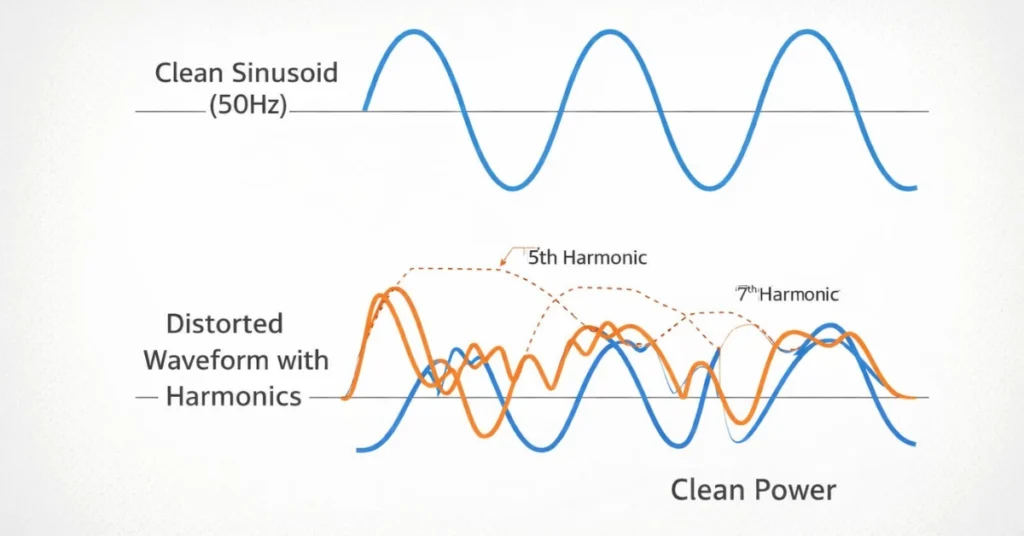
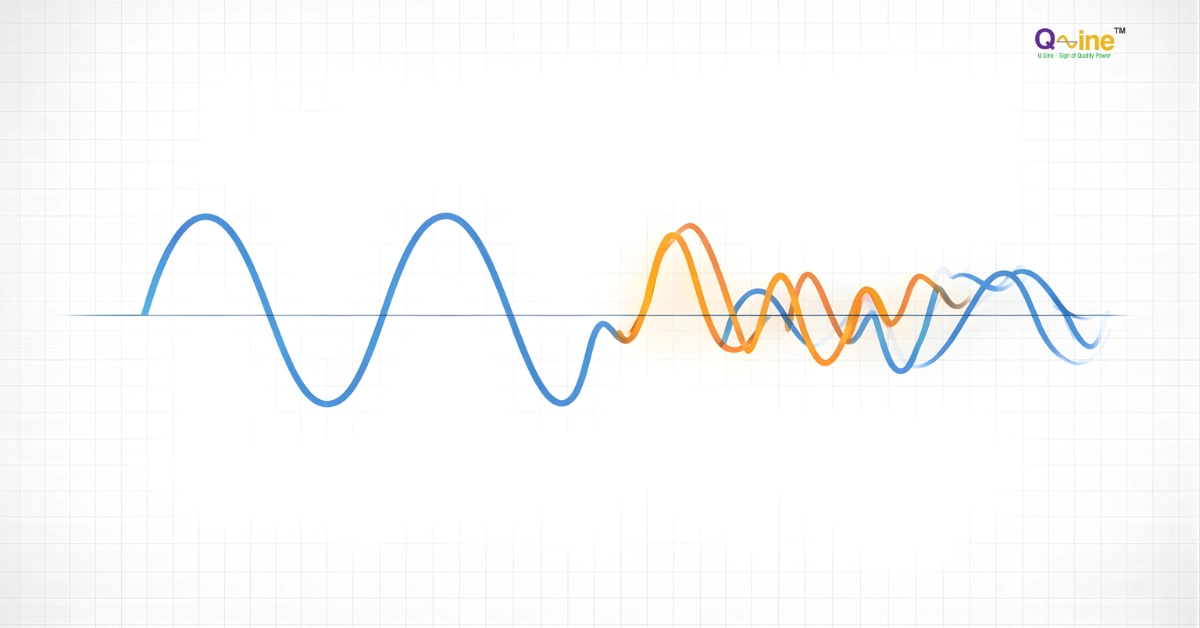
Harmonics in a power system are voltage or current distortions caused by non-linear electrical loads. They result in waveform deviations from the ideal sinusoidal shape. These distortions increase energy losses, overheat equipment, and reduce overall power system reliability.
To put it simply: Imagine a clean stream of water (the fundamental frequency of 50Hz). Now, imagine dumping rocks into that stream, causing splashes and erratic flow. Those “rocks” are harmonics—unwanted frequencies (multiples of the fundamental frequency, such as the 5th and 7th harmonic orders) that pollute your electrical network.
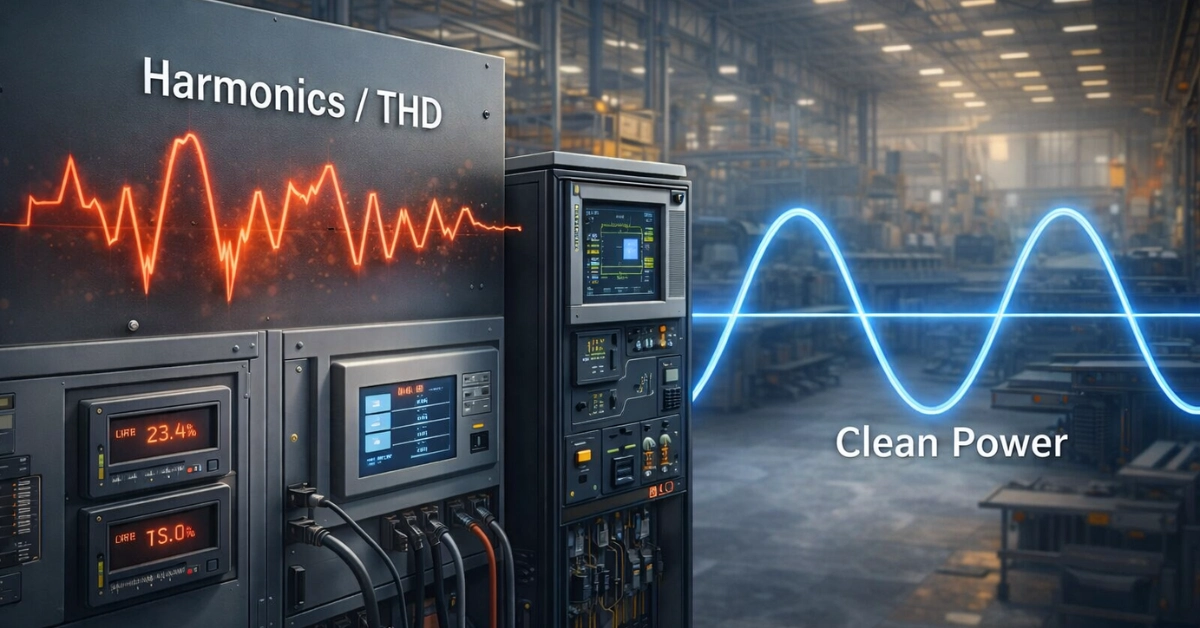
Engineers measure this pollution using Total Harmonic Distortion (THD%). If your THD is high, your “stream” is clogged, and your equipment has to work harder to function.
- Read More: For a deep dive into the physics of THD and fundamental frequency, read our guide: What are Harmonics? Understanding the Physics & Basics
Quick Diagnosis: Signs Your Facility Has Harmonic Issues
- Frequent Capacitor Failures: Power factor correction capacitors blowing out or bulging without clear cause.
- Transformer Overheating: Transformers running hot even when loaded below 50% capacity.
- Nuisance Tripping: Circuit breakers tripping randomly with no apparent overload.
- Flickering LED Lights: Visual distortion in sensitive lighting or display systems.
In most industrial plants, a Current THD above 8–10% is a strong indicator that active mitigation is required to protect equipment and ensure compliance.
If you checked more than one box, you likely have high harmonic distortion.
Causes of Harmonics: The Price of Automation
Ironically, the technologies that make your plant “smart” are the primary sources of harmonics in power systems. These are known as Non-Linear Loads.
Unlike linear loads (like incandescent heaters) that draw current smoothly, non-linear loads draw current in abrupt pulses.
Common Industrial Sources
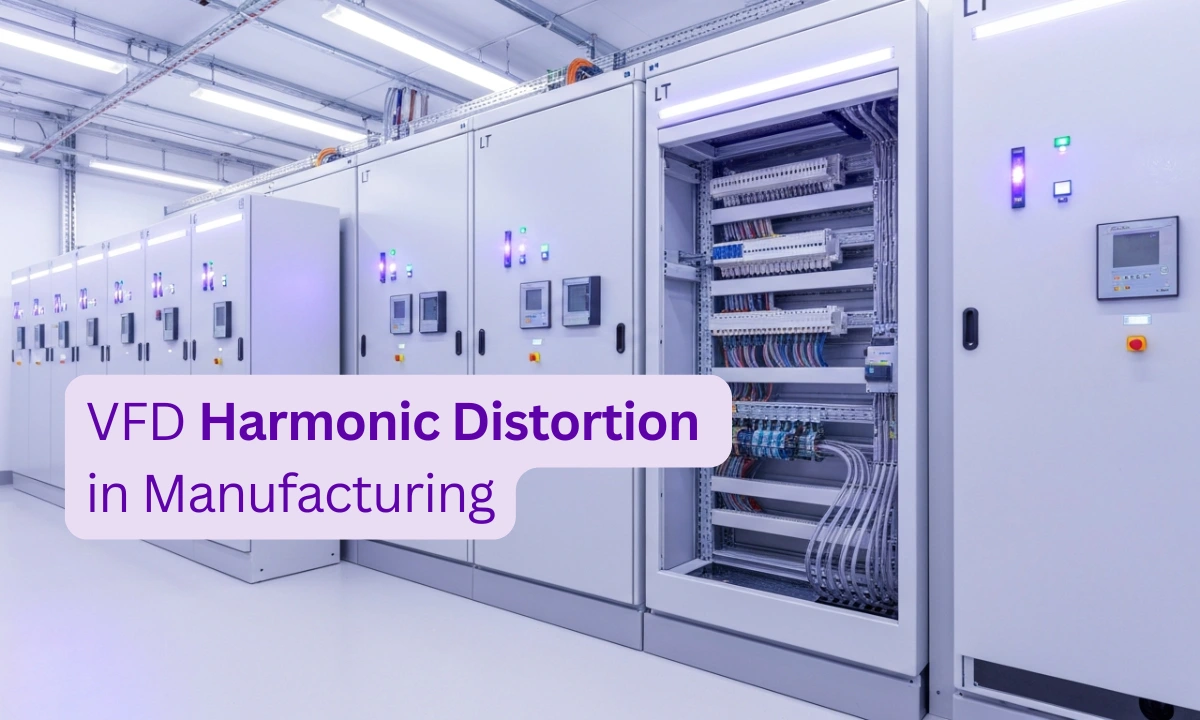
- Variable Frequency Drives (VFDs): Essential for motor control but a massive source of harmonic noise.
- Uninterruptible Power Supplies (UPS): Critical for backup, yet they introduce significant distortion.
- Rectifiers and Inverters: Used in almost all modern industrial electronics.
Real-World Scenario
Consider a textile plant in Gujarat. They recently upgraded to automated looms driven by VFDs to save energy. Within three months, their main transformer began overheating, and two capacitor banks failed. A generic audit revealed their Current THD had spiked to 32%—far above the safe limit—solely due to the new drives.
Note: Similar harmonic profiles are commonly observed in cement plants, injection molding units, and data centers with high UPS penetration.
The Effects: Why Harmonics Cost You Money
Ignoring harmonic distortion is expensive. The damage isn’t always immediate, but it is cumulative.
- Equipment Overheating & Skin Effect: Harmonic currents tend to flow on the outer “skin” of conductors. This causes cables to overheat and neutral conductors to burn out, posing a fire risk.
- Harmonic Resonance: This is the most dangerous effect. If the harmonic frequency matches the system’s natural frequency, it creates a feedback loop (resonance) that can catastrophically destroy capacitors and transformers.
- Reduced Equipment Lifespan: Motors running on distorted power run hotter and vibrate more, cutting their operational lifespan by up to 40%.
- Lower True Power Factor: Harmonics reduce the “true” power factor (by lowering the distortion power factor). A lower power factor directly increases the kVAh billing value, as the meter records more apparent energy for the same amount of useful work.
👉 Overall Harmonics adds maintenance and replacement cost (OPEX), Interruptions and downtime costs, also it reduces system capacities and thus increase CAPEX by additional expansion.
IEEE 519 Harmonic Limits for Industrial Power Systems
Compliance is critical for safety and to avoid utility penalties. The global standard for this is IEEE 519-2014.
This standard defines the limits for harmonic distortion at the Point of Common Coupling (PCC)—the point where your facility connects to the public grid.
Many state electricity boards in India now reference IEEE 519 harmonic limits within their power quality clauses and connection agreements, especially for medium and large industrial consumers. Non-compliance can lead to penalties, disconnection notices, or mandatory corrective action.
- Voltage Distortion Limits: For most general systems (<69 kV), the Total Voltage Harmonic Distortion (THD-v) must be ≤ 5.0%. Individual harmonic orders must be ≤ 3.0%.
- Current Distortion Limits: These vary based on the “stiffness” of the grid (Short Circuit Ratio), but generally, Total Demand Distortion (TDD) should be kept low to prevent polluting the grid.
Exceeding these limits often results in penalties from electricity boards and voided warranties on sensitive equipment.
Active Harmonic Filter vs Passive Filter: Which Is Better for Industry?
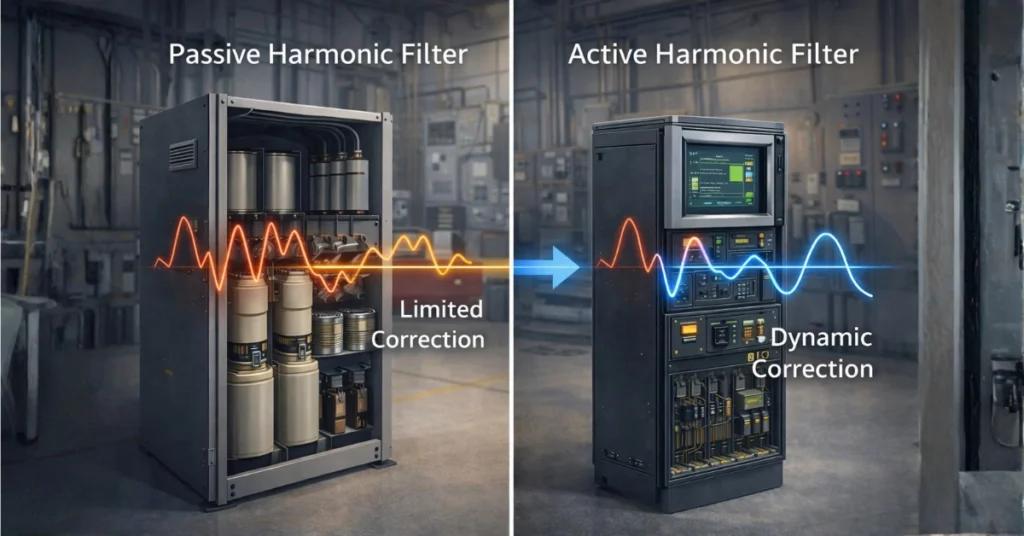
When it comes to mitigation, the choice between Active and Passive technology is critical for long-term ROI.
1. Passive Harmonic Filters
These are tuned LC circuits designed to absorb specific frequencies (e.g., usually the 5th or 7th harmonic).
- Pros: Lower initial cost.
- Cons: Bulky, can only filter one frequency at a time, and cannot handle dynamic load changes.
2. Active Harmonic Filters (AHF) – The Modern Solution
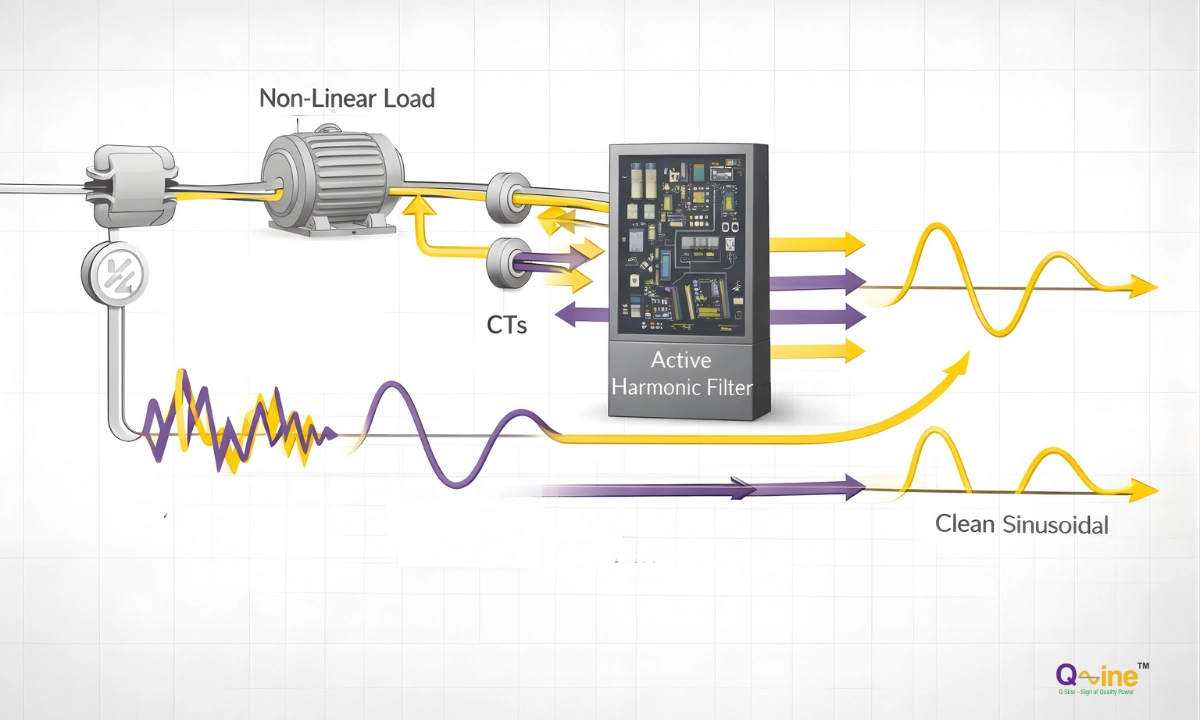
For dynamic industrial loads, Active Harmonic Filters are the gold standard. They monitor the dirty current and inject an equal but opposite “canceling” current instantly.
Quick Comparison: Which Do You Need?
| Feature | Passive Filter | Active Harmonic Filter (AHF) |
| Load Type | Best for fixed, constant loads | Best for dynamic, variable loads (VFDs) |
| Correction | Fixed capacity | Real-time, stepless correction |
| Size | Large / Bulky | Compact |
| Resonance Risk | High (if not detuned) | None (Active logic prevents it) |
At Q Sine, we offer state-of-the-art Active Harmonic Filter Panels designed specifically for heavy industrial use.
Not sure which filter fits your budget? Read our detailed comparison: Active vs. Passive Harmonic Filters: Which is Right for You?
Audit Methodology: How We Measure
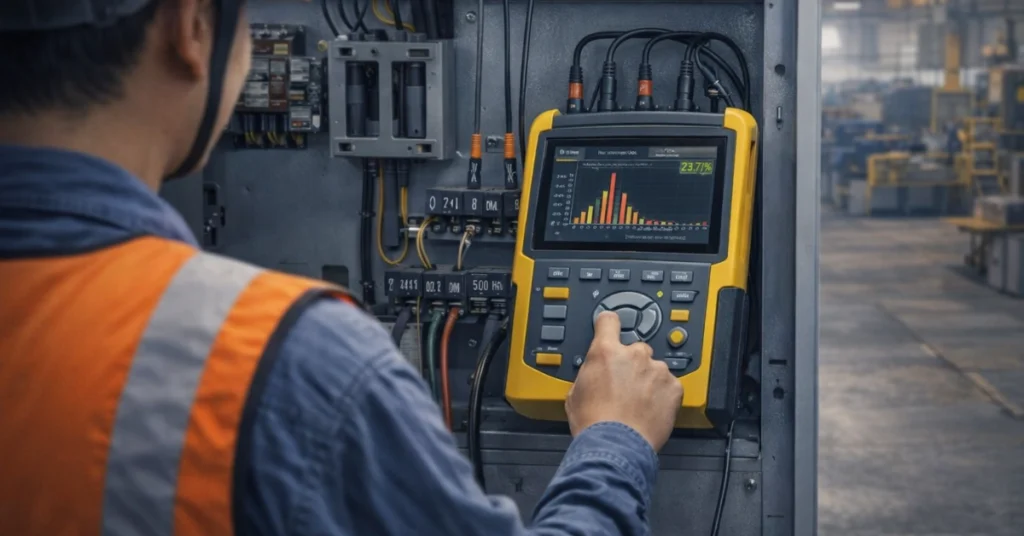
We don’t guess. We measure. A proper power quality audit is not just a 10-minute spot check.
To ensure accuracy, Q Sine conducts harmonic studies using Class A Power Quality Analyzers. We typically record data over a 8-24 hour data(depending upon load pattern) to capture every shift change, startup spike, and weekend load pattern. This ensures the solution we engineer handles your peak distortion, not just your average.
The Connection: Power Factor vs. Harmonics
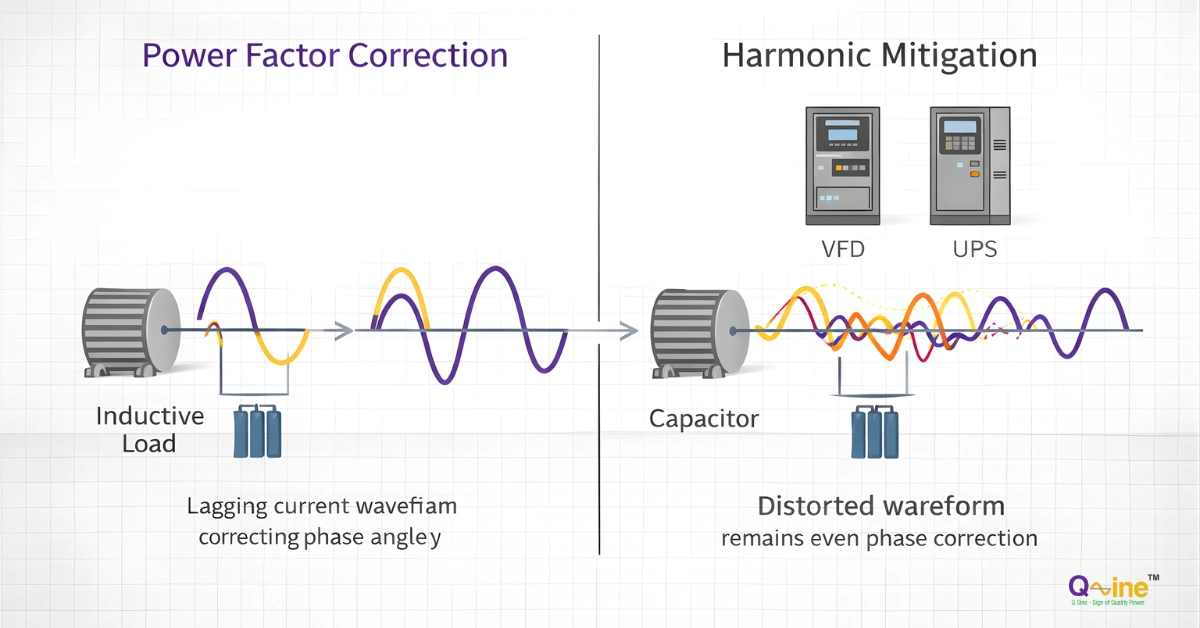
A common misconception is that fixing Power Factor (PF) fixes harmonics. This is false.
In fact, installing standard capacitors to improve Power Factor in a harmonic-rich environment can be dangerous. Standard capacitors act as a “sink” for high-frequency harmonics. Without detuned reactors, they will absorb these currents, overheat, and fail.
If you have both low Power Factor and high Harmonics, you need a hybrid solution or an SVG (Static Var Generator).
Learn the Difference: Don’t let capacitors damage your system. Read: Power Factor Correction vs. Harmonic Mitigation
Conclusion
Harmonics in power systems are invisible, but their impact on your bottom line is very real. If you are experiencing unexplained motor failures or breaker trips, simply buying a new capacitor bank isn’t the solution.
The first step isn’t to buy a product—it’s to diagnose the problem.
At Q Sine Energy Solutions, our engineering team brings 30+ years of combined experience in industrial power quality across manufacturing, textile, and heavy industries. We analyze your network, identify the specific harmonic orders, and prescribe the exact solution.
Ready to protect your equipment?
Book Your Power Quality Audit Today or explore our Active Harmonic Filter Solutions.
Frequently Asked Questions
What is the acceptable limit for harmonics in a power system?
According to IEEE 519-2014 standards, the recommended limit for Voltage Total Harmonic Distortion (THD-v) is 5% at the Point of Common Coupling (PCC).
Can a UPS cause harmonics?
Yes. While a UPS protects critical loads, the input stage of many standard UPS systems is non-linear. This can inject significant harmonic distortion back into the mains supply, affecting other equipment on the same grid.
When is an Active Harmonic Filter required?
An Active Harmonic Filter (AHF) is required if your facility uses variable loads (like VFDs, welders, or cranes) where distortion levels fluctuate. Passive filters are often insufficient for these dynamic environments.
Continue Reading
Get free access to this article and stay updated with Q Sine's latest insights on power quality and energy solutions. No spam, ever.
You're in!
Unlocking the full article now…
Your details are safe. We never share or sell your data.