
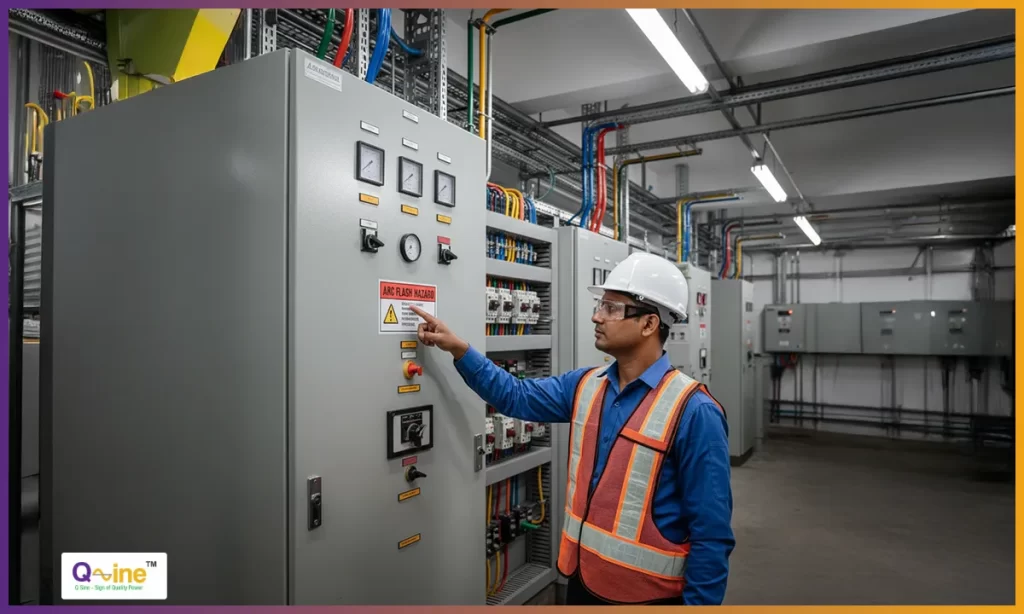
In the complex world of industrial plants, plant engineers and facility managers are constantly focused on maintaining efficiency, ensuring smooth operations, and keeping costs in check. Yet, one of the most severe and often overlooked dangers lurks within the electrical system: the arc flash. This sudden, violent release of electrical energy can turn a routine maintenance task into a catastrophic event, leading to severe injury, loss of life, and massive damage to critical infrastructure. For every plant engineer, understanding this hazard isn’t just about compliance; it’s about protecting personnel and the continuity of the business itself.
An arc flash is an electrical explosion that happens when an electric current jumps through the air between two conductors, or from a conductor to the ground. This event is incredibly fast, but the results are devastating. The intense energy released in a fraction of a second can heat the air to temperatures hotter than the surface of the sun—up to 20,000°C. This extreme heat creates a powerful pressure wave, known as an arc blast, which can propel molten metal and other debris at high speeds.
It’s a misconception that arc flash events only happen in high-voltage environments. In reality, a large number of incidents occur at low voltages (400V, 440V, etc.), which are very common in Indian industrial settings. The danger is not just the voltage, but the available fault current and the time it takes for protective devices to clear the fault.
The Real Dangers of an Arc Flash Incident
The consequences of an arc flash event are far-reaching, affecting both human life and business operations.
- Severe Burns: The most common injury from an arc flash is a thermal burn. The radiant heat is so intense it can cause third-degree burns from a distance, even without direct contact with the arc.
- Physical Injuries: The force of the arc blast can throw a worker across a room, causing broken bones, head trauma, and internal injuries. Flying debris can cause deep lacerations, eye injuries, and puncture wounds.
- Hearing Damage: The explosive sound of an arc blast can be louder than a jet engine, instantly rupturing eardrums and causing permanent hearing loss.
- Fatalities: Sadly, many arc flash incidents result in death, a stark reminder of the gravity of this hazard.
- Equipment and Downtime: Beyond human cost, an arc flash can completely destroy switchgear, panels, and other electrical equipment. This leads to extended downtime, significant repair and replacement costs, and a major loss in production.
A detailed power quality audit is one of the foundational steps in understanding and mitigating these risks. By analyzing the health of your electrical system, you can uncover potential weak points that could lead to an arc flash. To learn more about how a comprehensive power quality audit can help, you can refer to our blog on this topic, “Integrated Energy Solutions for Industrial Applications”.
The Necessity of a Formal Risk Assessment
Simply knowing about arc flash isn’t enough; you need a proactive plan to manage the risk. This is where a formal arc flash risk assessment becomes absolutely crucial. A risk assessment isn’t just a regulatory checkbox; it’s a systematic process to identify hazards, evaluate risks, and put controls in place to protect workers.
An effective risk assessment typically involves these steps:
- Data Collection: Gathering detailed information about your electrical system, including one-line diagrams, electrical component ratings, and circuit breaker settings.
- System Analysis: Using specialized software to model the electrical network. This analysis calculates the potential fault currents and determines the incident energy—the amount of thermal energy a worker would be exposed to at a specific distance from the arc.
- Determining Boundaries and PPE: Based on the incident energy calculations, the assessment determines the arc flash boundary. This is the safe distance at which a worker without personal protective equipment (PPE) could avoid a second-degree burn. It also specifies the correct arc-rated PPE required for any work performed within this boundary.
- Creating Warning Labels: Each piece of electrical equipment that poses an arc flash risk should have a clear warning label. This label provides essential information for workers, including the incident energy, the arc flash boundary, and the required PPE level.
This formal process helps a plant engineer in two key ways: it identifies the high-risk areas in the plant, and it gives clear instructions to workers on how to stay safe. It’s the difference between hoping for the best and actively planning for the worst.
Mitigating the Risk: Solutions Beyond Assessment
While a risk assessment is the first step, mitigation is the goal. A company like Q Sine, a specialist in energy saving and clean power solutions, can help you implement solutions to reduce or even eliminate arc flash hazards.
Some of these solutions include:
- Active Harmonic Filters (AHF): Non-linear loads from modern machinery like VFDs and PLCs can introduce harmonics into the electrical system. These harmonics can cause equipment to overheat and increase the likelihood of electrical faults. Active Harmonic Filters, as discussed in our blog on “Active Harmonic Filters (AHF) – What They Are and How They Work”, mitigate these harmonics, improving power quality and reducing stress on your electrical infrastructure.
- Static Var Generators (SVG): Poor power factor can also strain your electrical system. An SVG actively corrects power factor, ensuring your equipment operates efficiently and reducing the risk of overheating. This ties into our broader discussions on “What is Reactive Power Management?” and the benefits of “Hybrid Systems vs Traditional PFC Methods.”
- Protective Device Coordination: A critical part of an arc flash study is a protective device coordination analysis. By ensuring that your circuit breakers and fuses are properly coordinated, you can reduce the clearing time of an electrical fault. A faster clearing time means less energy is released in an arc flash, significantly lowering the incident energy and risk.
Arc flash hazards are a serious threat to the safety and productivity of any industrial plant. However, they are not an unavoidable risk. By conducting a formal arc flash risk assessment and implementing a strategic plan with the right solutions, plant engineers can create a safer, more reliable, and more compliant environment. At Q Sine, we believe that understanding these risks is the first step towards a better, safer industrial future.