
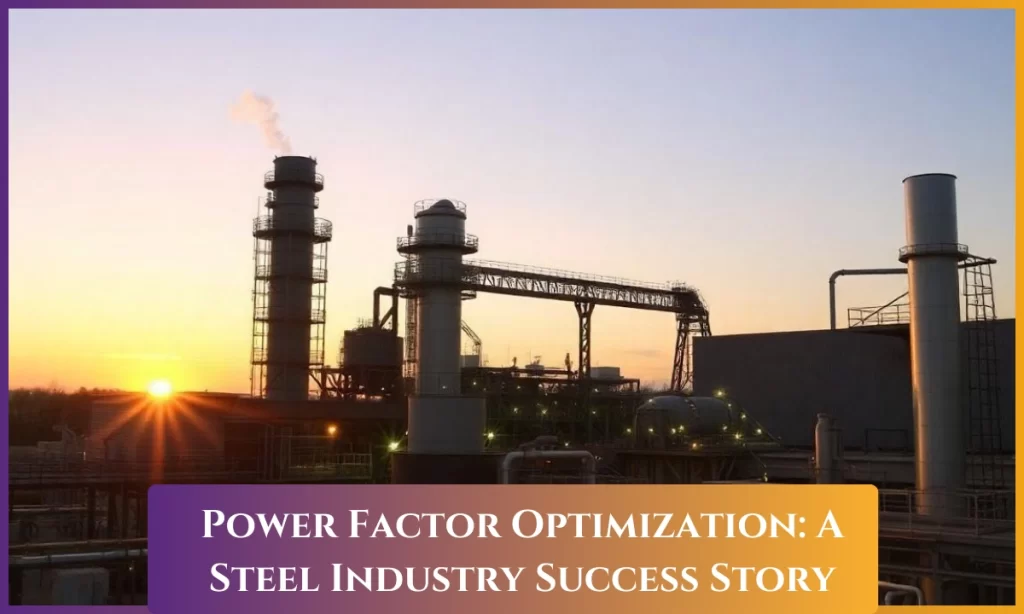
Introduction
The steel industry is a cornerstone of global economic growth, supplying essential materials for infrastructure, automotive, and construction sectors. However, it faces significant challenges due to high energy consumption, making efficient energy management crucial to reducing operational costs and improving efficiency.
This case study highlights how a special-purpose steel manufacturer in North Maharashtra improved its power factor, reduced energy losses, and achieved substantial cost savings.
Key Challenges Faced
Before implementing a power quality solution, the steel manufacturer encountered several energy-related challenges that inflated costs and reduced operational efficiency:
- Low Power Factor: The power factor was consistently below 0.985, indicating inefficient electrical energy usage. This resulted in higher demand charges and energy waste.
- High Harmonic Distortion: Total harmonic distortion in current (I-THDi) exceeded 11%, surpassing acceptable industry standards. High harmonic levels can damage sensitive equipment, increase electrical losses, and degrade overall power quality.
- Difference Between kWh and kVAh: The average difference between kilowatt-hours (kWh) and kilovolt-ampere-hours (kVAh) was approximately 150,000 units, leading to inflated electricity bills and inefficient energy usage.
- Load Factor: While implementing any solution, it was recommended to ensure that the Load Factor remains unaffected.
Strategies for Improvement
To address these challenges, a comprehensive strategy was implemented, focusing on four key areas:
1. Power Factor Correction (PFC)
Power factor correction devices such as Static Var Generators (SVG) were installed to compensate for inductive reactive power generated by heavy machinery. This measure helped bridge the gap between kWh and kVAh, leading to lower demand charges and more efficient energy use.
2. Load Management
A structured load management plan was created to ensure an even distribution of load across machines. Scheduling operations during off-peak periods reduced peak demand tariffs and improved the overall power factor.
3. Equipment Upgrades
Inefficient motors were replaced with energy-efficient alternatives, reducing both energy consumption and harmonic distortion.
4. Routine Maintenance
A regular maintenance schedule was established to keep electrical equipment in optimal working condition. Routine inspections and timely servicing helped prevent unexpected breakdowns and sustained the improved power factor over time.
Results and Achievements
Implementing these strategies led to significant improvements:
- Power Factor Improvement: The power factor increased from 0.985 to 0.997, surpassing the target of 0.995. This enhancement reduced demand costs and improved energy efficiency.
- Harmonic Distortion Reduction: Total current harmonic distortion (I-THDi) was reduced to below 6%, ensuring compliance with IEEE 519:2014 standards. Lower harmonics improved system reliability and minimized equipment damage.
- Energy Consumption Reduction: The gap between kWh and kVAh decreased from 148,640 to 27,315 units, resulting in direct cost savings by minimizing energy wastage.
- Demand Charge Reduction: The maximum demand (MD) of kVA was reduced from 32 to 11 kVA, lowering demand charges and optimizing load management.
- Cost Savings: These improvements led to savings of approximately Rs. 12 lakh per month, achieving the 18-month return on investment (ROI) target and making the project financially viable.
Conclusion
This case study demonstrates how targeted energy management strategies can significantly enhance power quality and drive cost savings. By focusing on power factor correction, load optimization, and equipment upgrades, the steel manufacturer achieved remarkable operational improvements and financial benefits.
How Q Sine Energy Can Help
Q Sine Energy offers tailored power quality solutions that help energy-intensive industries improve efficiency, reduce costs, and comply with energy standards. Their expertise in load management and power quality enhancement ensures long-term operational benefits and lower energy expenses.