
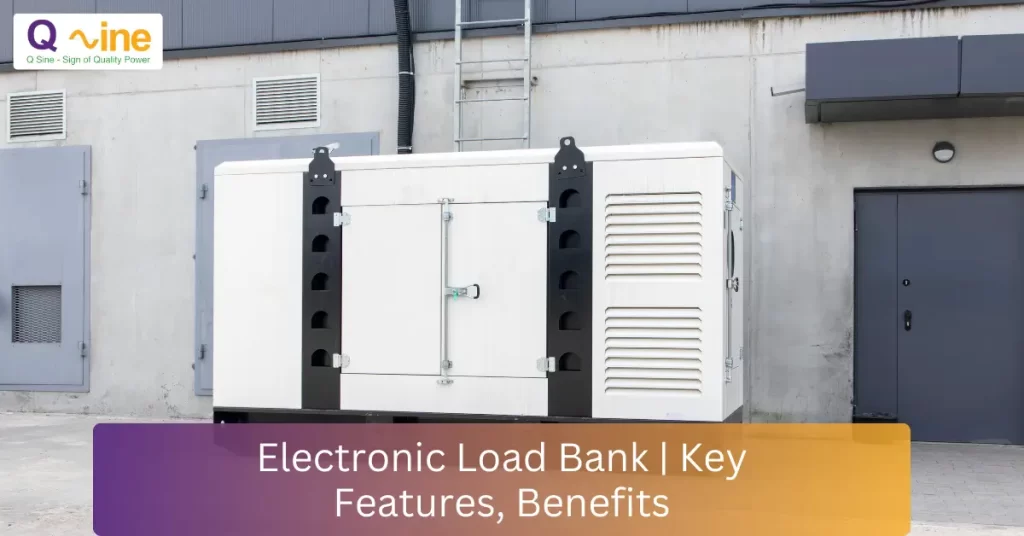
An Electronic Load Bank is a device used to simulate electrical loads on a power source like a generator, UPS (uninterruptible power supply), or battery system for testing, calibration, and maintenance purposes. It creates an artificial load to mimic real-world operating conditions, allowing technicians to verify the performance, capacity, and reliability of power systems without affecting the actual equipment or processes.
Key Features of an Electronic Load Bank
- Simulated Load Testing: It applies a controlled load to a power source, ensuring that equipment functions properly under different load conditions.
- Monitoring and Control: These load banks often have digital controls that allow for precise load adjustments, and they provide real-time monitoring of key parameters like voltage, current, and power.
- Heat Dissipation: The energy drawn from the power source is fed back to grid avoiding losses, heat loss in the ambient and improves safety.
- Applications: Used in industries like telecommunications, data centers, and power plants for testing backup systems, power generators, and battery performance under various load conditions.
Benefits of Electronic Load Bank
- Prevents Overload: Ensures that power sources can handle maximum capacity safely.
- Optimizes Performance: Identifies inefficiencies or issues before they affect operations.
- Maintenance: Helps in regular performance checks to ensure system readiness.
The Power of Precision: Electronic Load Bank by Q Sine
When it comes to ensuring the reliability of power systems in mission-critical industries, testing and maintaining equipment is non-negotiable. Whether you’re managing a data center, telecommunications infrastructure, or a power generation facility, ensuring your backup systems perform flawlessly is key. This is where Electronic Load Banks step in, and no one does it better than Q Sine.
Q Sine promoted Electronic Load Bank stands out for its advanced technology and superior design, providing the reliability and efficiency that your business needs. By simulating electrical loads, it allows you to test generators, UPS systems, and other power sources under real-world conditions without risking the actual equipment. Here’s why the Electronic Load Bank offered by Q Sine is the best choice for your power testing needs.
Why Choose the Electronic Load Bank by Q Sine?
Q Sine’s Electronic Load Bank is designed to offer precision, safety, and efficiency for both commercial and industrial applications. Here’s a breakdown of the key benefits:
1. Reduced Harmonic Distortion for Clean Power
The THDi (Total Harmonic Distortion) is kept under 5% and voltage distortion below 1%, ensuring a clean and stable power supply. This means fewer disturbances and better protection for sensitive equipment like data servers, medical devices, and telecommunications hardware.
2. High Power Factor for Maximum Efficiency
With a power factor (PF) near unity (≥ 0.99), the load bank provides optimum energy efficiency. This minimizes power losses, improves system stability, and lowers your operational costs, making Q Sine’s product both environmentally and financially smart.
3. Inbuilt Galvanic Isolation for Enhanced Safety
Safety is a priority. The inbuilt galvanic isolation separates electrical systems, preventing dangerous electrical noise or surges from affecting the performance of connected equipment. This feature makes the Q Sine load bank a safer and more reliable option.
4. State-of-the-Art Monitoring and Control
Q Sine’s 128 x 64 graphics display offers a high-resolution interface for real-time monitoring. With high-end interfacing options, users can closely observe and control the performance of the load bank, giving engineers the data, they need to make informed decisions about their power systems.
5. Quiet and Efficient Operation
Unlike traditional resistive load banks, Q Sine’s solution features advanced thermal design that minimizes noise and keeps operations quiet. Plus, it operates with over 94% efficiency, reducing energy losses and improving overall system performance.
6. Versatile and Robust Design
Q Sine’s load bank can operate in a wide range of temperatures, from 0°C to 40°C, withstanding tough environments. Its design adheres to IEC 62040-1, 62040-2, and 62040-3 standards, ensuring international compliance and durability.
7. Saves Energy and Improves Safety
With more than 95% energy savings, the Q Sine load bank minimizes heat loss, providing an environmentally conscious and safer alternative to conventional resistive load banks. This feature not only cuts energy costs but also improves overall system longevity.