
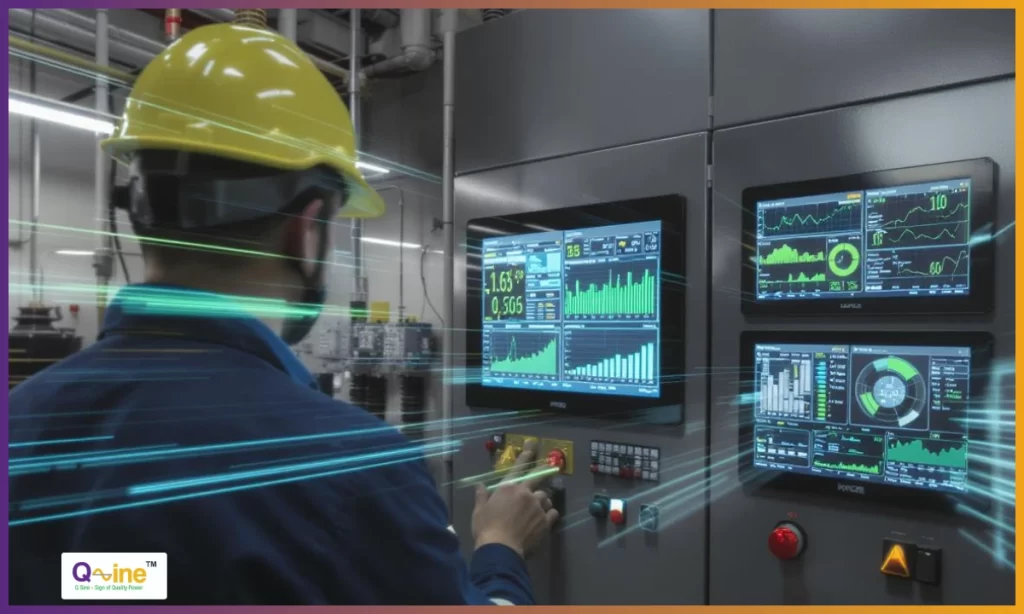
In the quest for energy efficiency, industrial facilities are increasingly turning to advanced solutions like SVG panels. These systems offer dynamic power factor correction, addressing reactive power challenges that traditional methods often fail to resolve. This article delves into how SVG panels work and why they’re becoming essential for modern power management.
What Are SVG Panels?
SVG stands for Static Var Generator. Unlike capacitors, which provide fixed compensation, SVG panels use Insulated Gate Bipolar Transistors (IGBTs) to generate or absorb reactive power dynamically. This technology responds instantly to power fluctuations, ensuring a stable power factor and minimizing energy waste.
How Do SVG Panels Correct Power Factor?
Power factor is the ratio of real power (kW) to apparent power (kVA) in an electrical system. A low power factor means higher energy costs and equipment strain. SVG panels monitor the power system in real time and adjust reactive power output to maintain an optimal power factor—typically above 0.95.
- Dynamic Response: SVGs correct power factor fluctuations within milliseconds.
- Harmonic Mitigation: They filter out harmonics caused by non-linear loads like VFDs.
- Voltage Stabilization: SVG panels prevent voltage sags and swells by balancing reactive power.
Advantages Over Traditional Capacitors
While capacitors are cost-effective for basic power factor correction, they have limitations:
- Fixed Compensation: Capacitors can’t adapt to rapid load changes.
- Harmonic Susceptibility: Capacitors may amplify harmonics in systems with non-linear loads.
- Overcompensation Risk: Capacitors can cause power factor oscillations if not properly sized.
SVG panels, however, offer:
- Precision: Real-time adjustments for fluctuating loads.
- Durability: No moving parts, reducing maintenance needs.
- Versatility: Effective in systems with high harmonics or frequent load variations.
For a deeper comparison, explore our article on SVGs vs. Capacitors.
Applications in Industry
SVG panels are particularly valuable in sectors with demanding power requirements:
- Manufacturing: Stabilizes power supply for CNC machines and robotics.
- Mining: Mitigates reactive power issues in heavy-duty equipment.
- Renewable Energy: Balances power fluctuations in solar and wind installations.
Case Study: SVG Implementation in a Steel Plant
A steel manufacturing facility faced penalties due to poor power factor and harmonic distortion. After installing SVG panels, the plant achieved:
- 15% reduction in energy costs.
- 98% reduction in harmonic distortion.
- Elimination of utility penalties.
Read more success stories in our hybrid filter case studies.
Choosing the Right SVG Panel
Selecting an SVG system depends on factors like load size, harmonic levels, and voltage requirements. Our guide on how to choose the right Static Var Generator provides a step-by-step framework.
Conclusion
SVG panels are a game-changer for industrial power quality. By dynamically correcting power factor and mitigating harmonics, they reduce costs, enhance equipment lifespan, and ensure compliance. As part of hybrid power factor correction systems, SVGs complement traditional solutions like capacitors for optimal efficiency.
For tailored advice on implementing SVG technology, contact Q Sine’s experts. Visit qsine.co.in to explore our energy-saving solutions.
Ready to upgrade your power factor correction? Explore Q Sine’s SVG panels and hybrid systems designed for industrial reliability. Reach out today for a customized assessment.