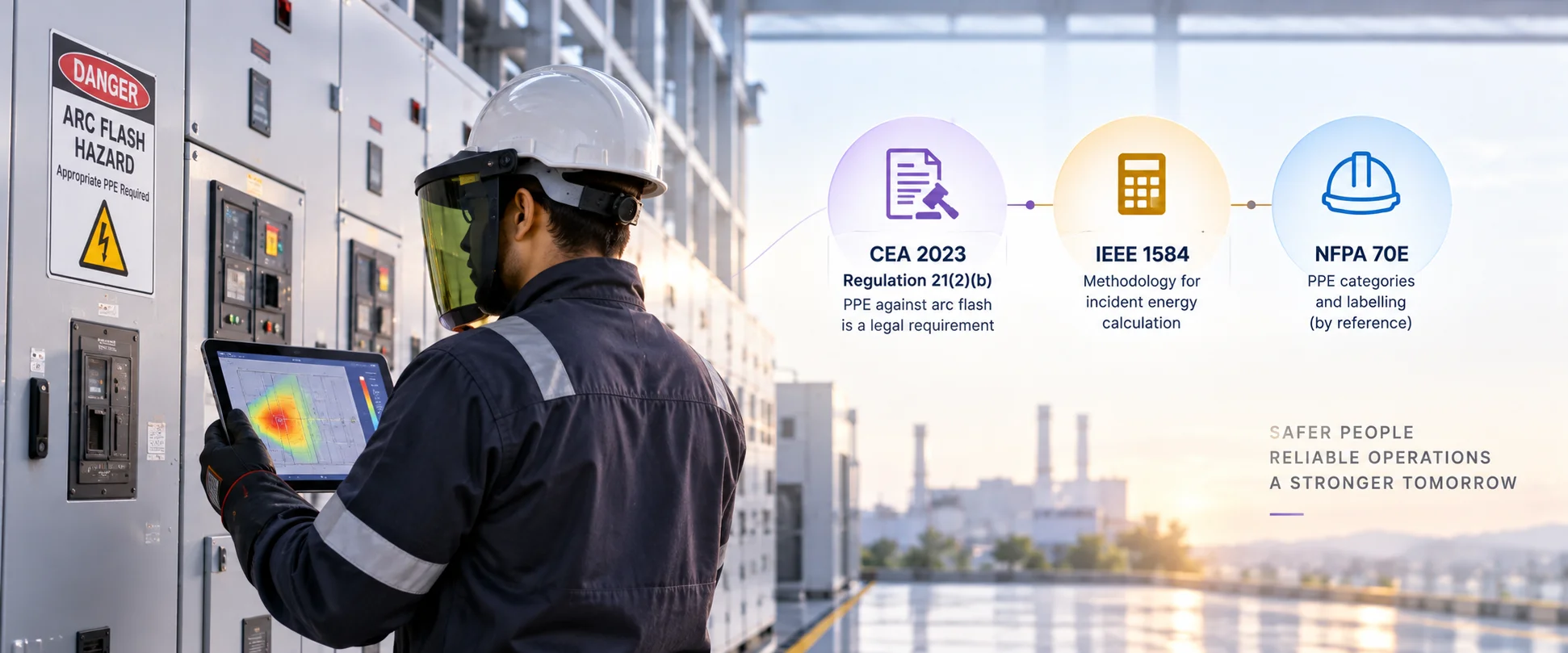
Q Sine Energy Solutions Pvt. Ltd. is a Pune-based ISO 9001:2015 certified power quality and energy management manufacturer with 550+ installations across India. Arc flash compliance in India does not come from NFPA 70E, since that standard has no legal force here; it comes from a specific clause in India’s own regulations. Regulation 21(2)(b) of the CEA Safety Regulations, 2023 names arc flash directly, inside a binding PPE requirement. Skip that clause and a plant risks disconnection, not merely an NFPA paperwork gap. The same regulations pull IEEE 1584 into force for the calculation itself, since Regulation 14(2) requires international standards where no Indian standard exists. Every factory with connected load above 250 kW must appoint an Electrical Safety Officer, inspected yearly. This post maps the exact clauses that create the obligation and what a compliant study covers.
Key Takeaways
- CEA Regulation 21(2)(b) names arc flash directly, inside a binding PPE duty for anyone working live.
- NFPA 70E and IEEE 1584 aren’t Indian law; Regulation 14(2) pulls them in by reference.
- Factories above 250 kW connected load must appoint an Electrical Safety Officer, inspected yearly.
- A “likely to be dangerous” finding lets the Electrical Inspector refuse or disconnect supply.
- CEA 2023 supersedes the 2010 Regulations; confirm which edition your report cites.
Is Arc Flash Compliance Legally Required in India?
Not by that name, but effectively yes. No Indian regulation uses the phrase “arc flash study” as a standalone requirement. Regulation 21(2)(b) of the Central Electricity Authority (Measures relating to Safety and Electric Supply) Regulations, 2023 names arc flash directly inside a binding PPE duty, and that duty cannot be met without first calculating the hazard it protects against.
The regulation requires personal protective equipment and any other device protecting workers from mechanical and electrical injury due to arc flash, maintained in sound working condition. CEA 2023 superseded the CEA 2010 Regulations on notification in June 2023, so a consultant’s report still citing the 2010 rules is citing a repealed regulation. Only a “designated person” who holds a competency certificate or electrical work permit under Regulation 3 may lawfully perform maintenance work near live apparatus in the first place.
Which Standard Actually Governs the Arc Flash Calculation?
IEEE 1584-2018 governs the incident energy calculation itself, and NFPA 70E governs the resulting PPE category and label content. Neither is Indian law. Both apply in India through Regulation 14(2) of the CEA Regulations, 2023, which requires international standards wherever no equivalent Indian standard exists, and no Indian standard currently covers incident energy calculation.
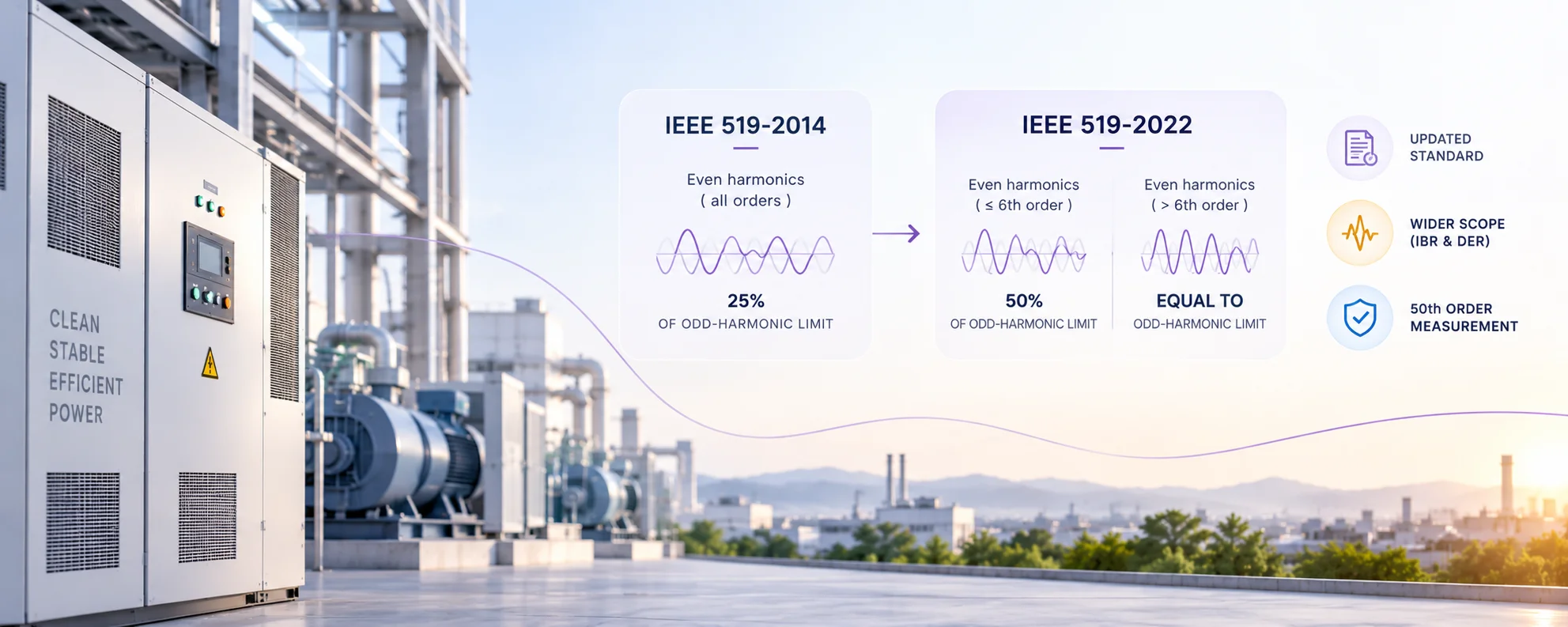
This is the same incorporation mechanism that pulls IEEE 519-2022 into force for harmonic limits at the point of common coupling, since Indian standards bodies have not published a domestic equivalent for either calculation. A study built on IEEE 1584-2018 methodology and referenced against NFPA 70E therefore satisfies the CEA’s own requirement, while a study citing only NFPA 70E and skipping the Indian regulation citation leaves the compliance argument incomplete.
What Happens If a Plant Skips the Arc Flash Study?
Two separate risks apply. Under Regulation 32 and 33, an Electrical Inspector who finds an installation “likely to be dangerous” can refuse a new connection or order an existing one disconnected. Separately, after an actual incident, the absence of a documented hazard assessment weakens the employer’s due-diligence position under the Factories Act, 1948.
This article does not diagnose a specific plant’s PPE category; that number depends on the actual fault current and clearing time at each panel, measured on site. What a study delivers instead is the documented, dated calculation the CEA regulations and any post-incident inquiry both expect to see.
Where Each Requirement Sits in Indian Law
Three separate CEA clauses do the work that a single named regulation would do elsewhere.
| Requirement | Indian Legal Basis | International Method Referenced |
| PPE against arc flash injury | CEA 2023, Regulation 21(2)(b) | NFPA 70E PPE category tables |
| Incident energy calculation | CEA 2023, Regulation 14(2) | IEEE 1584-2018 |
| Periodic installation inspection | CEA 2023, Regulation 5(3) | — |
| Who may work on live apparatus | CEA 2023, Regulation 3 | — |
Q Sine Solution
Q Sine’s Arc Flash Study Service calculates incident energy under IEEE 1584-2018 methodology and issues NFPA 70E-referenced PPE categories and equipment labels for every panel assessed, mapped directly against the CEA 2023 clauses above. The same field team stands behind 550+ installations across India, spanning pharma, automobile, and process manufacturing. [Arc Flash Study Service →]
Is NFPA 70E a legal requirement in India?
No. NFPA 70E is a voluntary US standard with no legal force in India. It matters here only because CEA Regulation 14(2) pulls in international standards wherever no Indian standard exists, and none covers arc flash PPE tables. Citing NFPA 70E alone does not satisfy Regulation 21(2)(b); Q Sine’s Arc Flash Study Service ties the label content back to that clause.
What is the CEA regulation for arc flash safety?
Regulation 21(2)(b) of the CEA (Measures relating to Safety and Electric Supply) Regulations, 2023 is the specific clause, requiring PPE against mechanical and electrical injury from arc flash for anyone working on live apparatus. It sits in Chapter III alongside the danger-notice rules covered in our earlier post on arc flash studies.
Who needs an Electrical Safety Officer under CEA rules?
Any factory with connected load above 250 kW must designate an Electrical Safety Officer under Regulation 5(3), inspected at intervals not exceeding one year. This is separate from a dedicated arc flash study; our Short Circuit and Relay Coordination Study Service covers the related protective-device side.
Ready to Quantify Your Facility’s Arc Flash Risk?
If your NFPA 70E paperwork stops short of a calculated incident energy value, an arc flash study closes that gap. Q Sine calculates incident energy under IEEE 1584-2018 methodology and maps the result to CEA Regulation 21(2)(b).
Continue Reading
Get free access to this article and stay updated with Q Sine's latest insights on power quality and energy solutions. No spam, ever.
You're in!
Unlocking the full article now…
Your details are safe. We never share or sell your data.