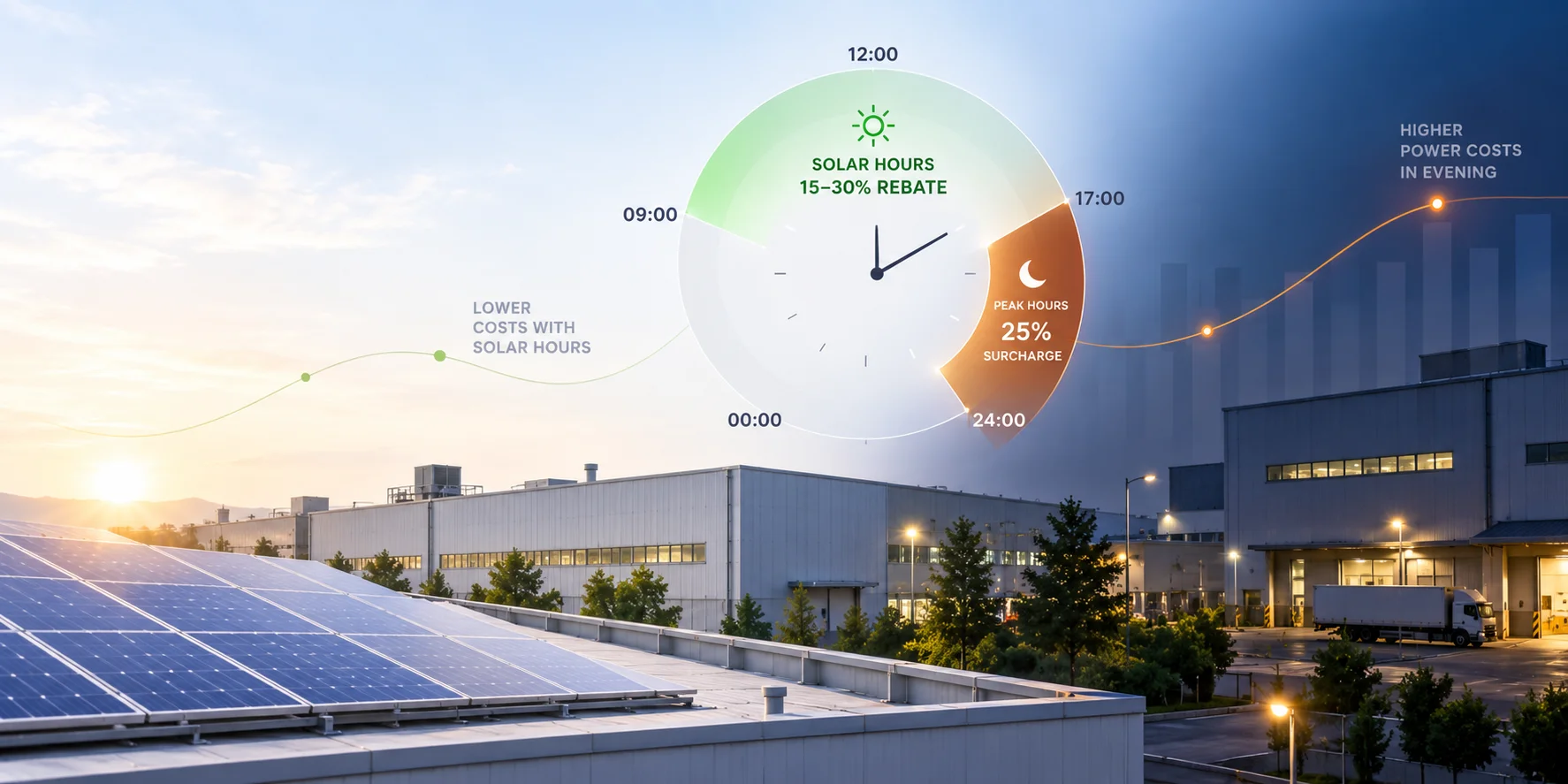

Q Sine Energy Solutions is a Pune-based power quality and energy management manufacturer with 30+ years of experience and 550+ installations across Maharashtra and pan-India. MSEDCL’s Time of Day (ToD) tariff is a differential pricing mechanism mandated by MERC under the Multi-Year Tariff Order 2023-24 that charges industrial consumers at higher unit rates during peak demand hours and applies a rebate during off-peak periods. Three time slots define the structure: peak (06:00-09:00 and 18:00-23:00), off-peak (23:00-06:00), and normal hours covering the remaining window. Under the current MERC order, HT consumers and LT industrial consumers with sanctioned load above 20 kW are subject to a peak-hour surcharge of 20 paise per kWh and an off-peak rebate of 10 paise per kWh on energy charges. A 500 kVA plant drawing 300 kW across both peak windows accumulates over 3,000 peak-rated units daily, which translates to a ToD surcharge exceeding INR 1.8 lakhs per year with no change in process output. Shifting non-critical loads such as compressed air charging, water treatment, and pre-cooling cycles to the off-peak window eliminates that surcharge and converts it to a rebate. Q Sine’s energy-saving solutions help manufacturers in Pune Hinjewadi, Nashik MIDC, and Aurangabad MIDC map load profiles against ToD slots and set measurable reduction targets.
Key Takeaways
- MSEDCL’s ToD tariff applies to HT consumers and LT industrial loads above 20 kW, with a peak surcharge of 20 paise/kWh and an off-peak rebate of 10 paise/kWh under the MERC MYT Order 2023-24.
- Peak slots run 06:00-09:00 and 18:00-23:00 daily. A factory drawing 250 kW during both windows logs over 2,500 peak-rated kWh per day, making load timing the single largest controllable billing variable.
- Q Sine’s energy audit service maps every load against MSEDCL ToD slots, quantifying the bill reduction before any capital outlay.
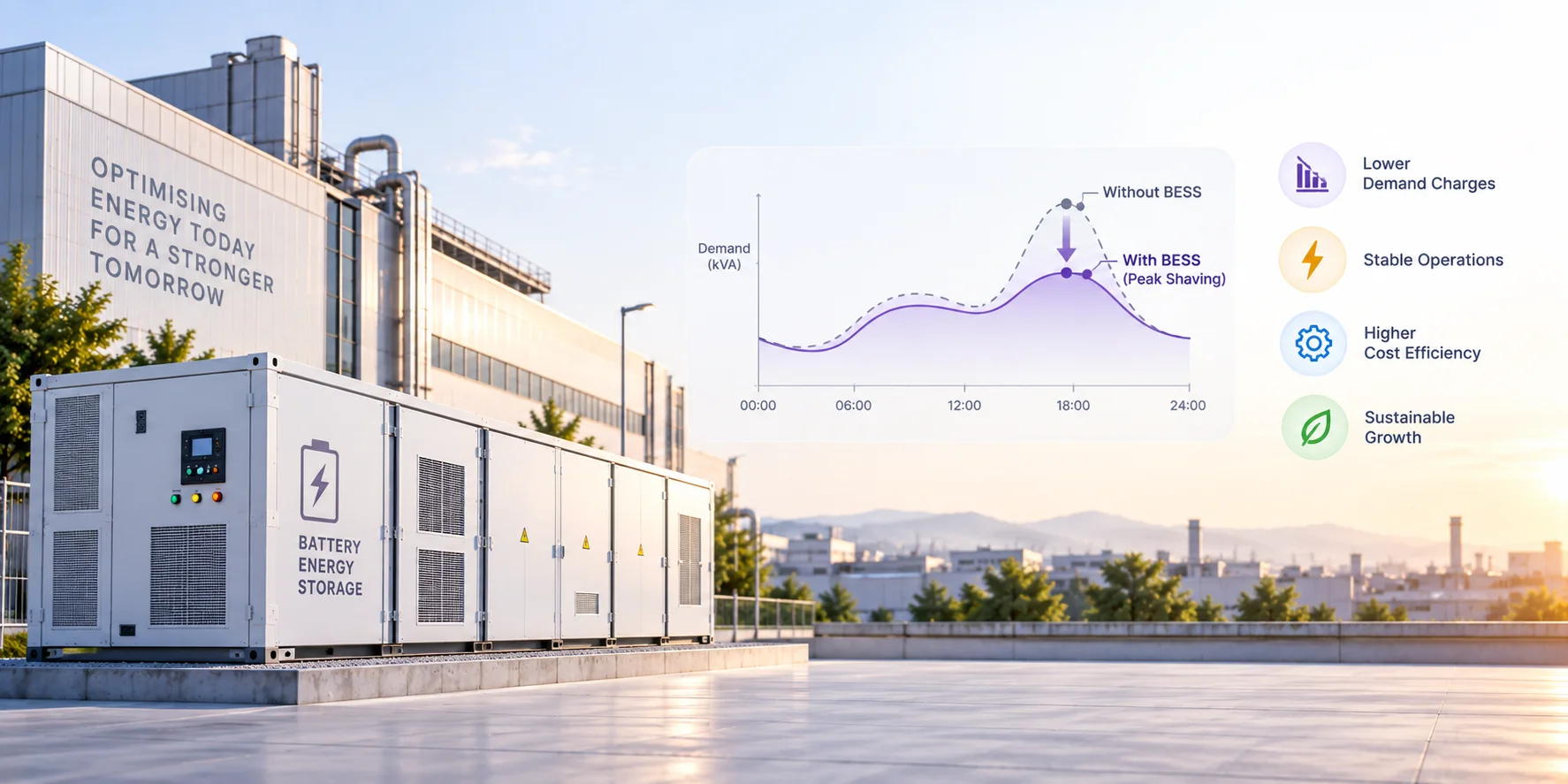
- Load scheduling, BESS peak shaving, and APFC Panel power factor correction together address ToD surcharges, maximum demand charges, and PF penalties in a single coordinated strategy.
Manufacturers who shift 30% of peak-hour consumption to off-peak windows reduce ToD-related billing by INR 1.5-3 lakhs per year, depending on contract demand (Q Sine field data, 2024).
What Is the MSEDCL ToD Tariff?
Maharashtra State Electricity Distribution Company Limited (MSEDCL) is the distribution licensee serving most of Maharashtra’s industrial and commercial consumers. MERC, the Maharashtra Electricity Regulatory Commission, sets tariff structures through Multi-Year Tariff Orders. The current MYT Order 2023-24 mandates Time of Day pricing for HT Category and certain LT industrial categories to flatten demand peaks on the state grid.
The logic is simple. MSEDCL faces demand peaks in the morning and evening when industrial and domestic loads coincide. The utility incentivises consumers to shift load away from these windows by making peak-period energy more expensive and off-peak energy cheaper. Every unit a plant shifts from 19:00 to 01:00 earns a double benefit: the 20 paise peak surcharge is avoided, and the 10 paise off-peak rebate is credited.
MSEDCL ToD Slot Structure and Rates
The following rates are applicable under the MERC Multi-Year Tariff Order 2023-24 for HT consumers. LT industrial consumers above 20 kW sanctioned load follow the same slot structure with adjustments to base energy charges by consumer category. MSEDCL measures Maximum Demand in 30-minute blocks, and the peak period slot boundaries apply to demand registration as well as energy.
| Time Slot | Period | Rate Adjustment | Applicable To |
| Peak | 06:00-09:00 and 18:00-23:00 | +20 paise/kWh surcharge | HT and LT industrial above 20 kW |
| Normal | 09:00-18:00 and 23:00-00:00 | Base energy rate applies | All ToD-applicable consumers |
| Off-Peak | 23:00-06:00 | -10 paise/kWh rebate | All ToD-applicable consumers |
Note: Slot boundaries and surcharge values are defined in the applicable MERC tariff order for your consumer category. HT consumers should verify their specific tariff schedule against their MSEDCL supply code category before calculating projected savings.
What Load Shifting Actually Saves
A textile unit in Ichalkaranji with a 630 kVA contract demand draws approximately 400 kW across the two daily peak windows. On a 26-working-day month, peak consumption from those windows alone reaches roughly 62,400 kWh. At a 20 paise surcharge, that is INR 12,480 in avoidable peak charges monthly. Shifting 40% of that load to off-peak periods reduces the surcharge exposure to INR 7,488 per month and adds an off-peak rebate of approximately INR 3,744. The net monthly gain exceeds INR 8,700 with no production change.
Three categories of load are consistently shiftable across Maharashtra’s manufacturing base. Compressed air systems can be recharged at night to maintain morning pressure. Water treatment and effluent processing are not time-critical and run equally well at 02:00. Pre-cooling or pre-heating cycles for process ovens and autoclaves can be timed to complete before the 06:00 peak window opens. None of these require process modifications; they require a scheduler and, in some plants, a basic programmable logic controller (PLC) update.
How to Begin Optimising Your MSEDCL ToD Bill
Start with your MSEDCL monthly bill. The ToD surcharge appears as a line item in your energy charges section, and your supply category determines which tariff schedule applies. If your plant is on HT Category 2 or HT Category 3, ToD billing is already active. For LT industrial consumers, check whether your sanctioned load exceeds the 20 kW threshold specified in your current tariff order.
- Pull 12 months of MSEDCL bills and extract monthly peak-hour energy charges and maximum demand registration separately.
- Install sub-metering or use your energy meter’s time-stamped data to identify which loads are active during the 06:00-09:00 and 18:00-23:00 windows.
- Classify each load as process-critical or schedulable. Compressed air, water systems, and auxiliary cooling almost always qualify for shifting.
- Calculate the INR value of each shiftable load using the MERC tariff rate plus the off-peak rebate to determine payback on any scheduling automation investment.
Conclusion
MSEDCL’s The ToD tariff is one of the most transparent and actionable levers available to Maharashtra’s industrial electricity consumers. The peak surcharge and off-peak rebate structure rewards factories that manage their load timing, and the 30-minute MD measurement window creates a second incentive to keep peak-hour demand flat. For most plants, the lowest-capital path to savings is a load scheduling audit followed by timer automation on non-critical systems. For plants with high contract demand and limited scheduling flexibility, BESS peak shaving closes the gap. Q Sine Energy Solutions is a Pune-based power quality and energy management manufacturer that has completed energy audits and ToD optimisation projects across Maharashtra, Gujarat, and Karnataka. To understand the specific ToD saving potential at your facility, start with Q Sine’s energy saving solutions or request a site-specific energy audit.
Frequently Asked Questions
Who is subject to MSEDCL ToD tariff?
MSEDCL’s ToD tariff applies to all High Tension (HT) consumers and LT industrial consumers with sanctioned load above 20 kW under the MERC MYT Order 2023-24. This covers the majority of manufacturing facilities, commercial complexes, and large commercial establishments in Maharashtra drawing power on HT supply.
What are the current MSEDCL ToD peak and off-peak windows?
Under the MERC MYT Order 2023-24, peak hours run from 06:00 to 09:00 and 18:00 to 23:00 daily. Off-peak hours run from 23:00 to 06:00. Normal hours cover the remaining periods. MSEDCL applies a 20 paise per kWh surcharge during peak hours and a 10 paise per kWh rebate during off-peak hours on energy charges.
How does MSEDCL measure maximum demand in relation to ToD tariffs?
MSEDCL measures Maximum Demand (MD) in 30-minute blocks. The highest 30-minute block reading in a billing month sets the MD charge for that month. ToD surcharges on energy are separate from MD charges, but peak-hour load directly inflates MD registration, making load curtailment during 06:00-09:00 and 18:00-23:00 doubly valuable.
Does poor power factor affect ToD billing?
Yes. MSEDCL applies a PF surcharge when a consumer’s average monthly power factor falls below 0.90. This surcharge is applied to the total energy charge, including any ToD surcharges already levied. A plant with a 0.82 power factor during peak hours therefore pays the peak surcharge plus the PF penalty on the same units.
What is the payback period for ToD optimisation at a manufacturing plant?
Scheduling changes alone, such as timer-based load shifting for compressed air and water systems, typically cost INR 50,000-1.5 lakhs in automation and deliver annual savings of INR 1.5-4 lakhs at a 500 kVA plant, giving a payback of under 12 months. BESS-backed peak shaving carries a longer payback of 3-5 years depending on contract demand.
References
[1]. MERC (2023). Maharashtra Electricity Regulatory Commission Multi-Year Tariff Order 2023-24 for MSEDCL. Maharashtra Electricity Regulatory Commission. Case No. 225 of 2023.
[2]. MSEDCL (2024). Schedule of Tariffs 2024-25: HT and LT Consumer Categories. Maharashtra State Electricity Distribution Co. Ltd.
[3]. BEE (2023). Bureau of Energy Efficiency: Guidelines for Energy Audits in the Industrial Sector. Ministry of Power, Government of India.
[4]. CEA (2024). Central Electricity Authority: Growth of Electricity Sector in India 2024. Ministry of Power.
[5]. MERC (2023). MSEDCL Supply Code 2023: Conditions for Connection and Use of Distribution System. Maharashtra Electricity Regulatory Commission.
[6]. Q Sine Energy Solutions (2024). Field data from BESS and energy audit installations across Maharashtra. Internal installation records.
Continue Reading
Get free access to this article and stay updated with Q Sine's latest insights on power quality and energy solutions. No spam, ever.
You're in!
Unlocking the full article now…
Your details are safe. We never share or sell your data.